
Spider Fuser: Hero Simulator
R-USER GamesAction
4.4329.00 Reviews
- Version
- 2.04
- Installs
- 1.00M
- Age Rating
- Teen
Screenshots
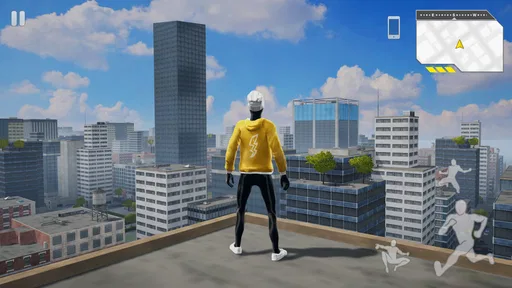
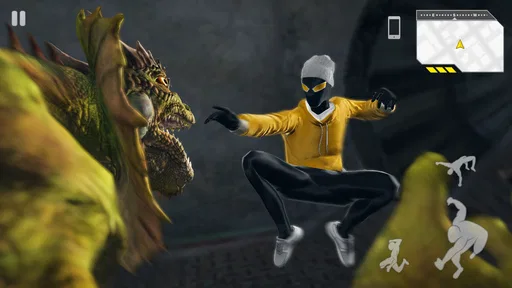
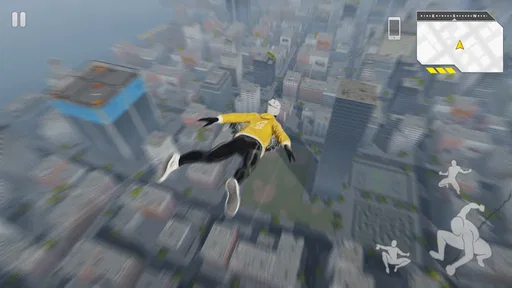
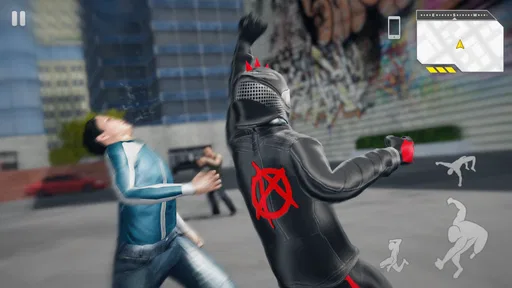
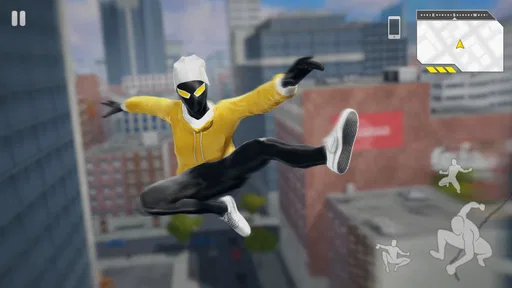
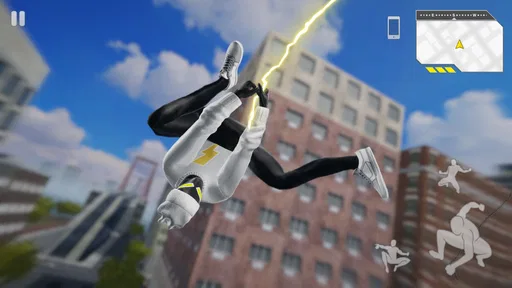
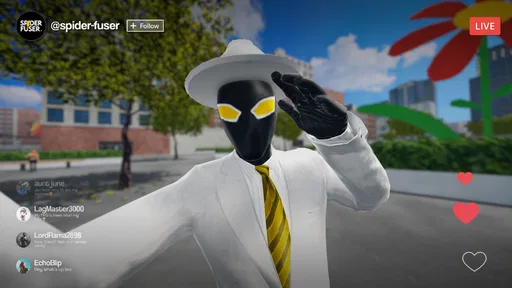
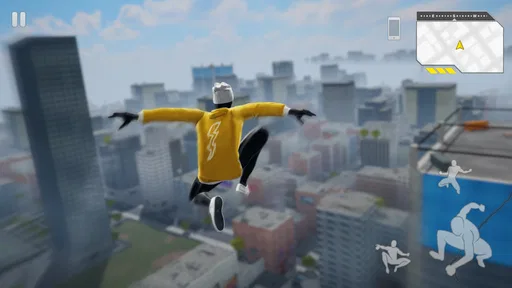
Our Review of Spider Fuser: Hero Simulator
 Analysis by Appyee
I spent time with Spider Fuser: Hero Simulator to see whether its superhero fantasy is comfortable to follow and control in ordinary play, not just exciting in a store preview. Developed by R-USER Games, this free action game puts me in the role of a web-slinging protector moving through Starfall City. Its central appeal is easy to understand: travel through a city from above, react to danger, and enjoy the feeling of being the hero rather than managing a complicated strategy system.
That simple premise also makes the game interesting from an inclusive point of view. A game built around movement and quick reactions can be inviting for some players while creating friction for others. I found that the experience depends heavily on how comfortable you are with touch controls, visual motion, and keeping track of activity in a busy city scene. The following is my practical look at where it works well, where it asks more from the player, and who is most likely to enjoy it.
How clearly the city and its action come across
I look at how clearly Starfall City communicates where I am and what deserves my attention while I’m moving. That matters because a readable scene can make fast action feel manageable, while visual clutter can turn even a simple goal into guesswork. From there, I’ll consider how those demands affect the way I choose a setting and pace for play.
Readability and navigation
The strongest part of the concept is its immediate visual goal. Starfall City gives the game a clear setting, and swinging through it makes movement feel more meaningful than simply walking from one menu to another. I did not need a long explanation to understand the basic fantasy: gain momentum, move across the skyline, and stay alert for situations that need a hero. That clarity is useful for players who prefer learning through action instead of reading lengthy instructions.
At the same time, a city environment can become visually demanding. Buildings, roads, movement, and points of interest compete for attention, especially when I am trying to control a swing rather than calmly inspect the surroundings. Players who have difficulty distinguishing small objects, low-contrast elements, or rapidly changing scenes may need more time to understand what deserves attention. The game’s broad superhero presentation is readable at a glance, but that does not automatically make every moment easy to parse.
I found it helpful to treat navigation as a two-step task. First, I focused on the direction of travel and avoided trying to inspect every part of the skyline. Then, once I was moving safely, I looked for the next meaningful event. This approach reduces the mental load created by trying to read the whole city at once. It is a small habit, but it makes the game feel less chaotic and gives the player more control over the pace of attention.
The interface is likely to feel most approachable to people who enjoy visual guidance and can make quick judgments from the screen. It is less naturally suited to someone looking for a calm, text-led experience with clearly separated menus and minimal motion. That is not a flaw in the game’s identity, but it is an important distinction when choosing it for a particular player.
One practical question is whether a new player can understand what to do without already being familiar with superhero games. In my experience, the premise does most of that work. The player is not asked to invent a complicated plan before getting started. The challenge comes later, in coordinating movement and response, rather than in decoding an elaborate ruleset. That makes the first contact approachable even if mastering the rhythm takes longer.
Motor and sensory considerations
The main physical demand comes from controlling movement while watching the environment. A player who is comfortable with repeated touch gestures and quick corrections will probably settle in faster. Someone with limited fine-motor control, hand fatigue, tremors, or difficulty holding a device steady may find the swinging sections more demanding than the premise suggests. The difference between understanding the goal and being able to execute it comfortably is important here.
I would not describe the game as a passive superhero story. It expects participation, and the pleasure comes from feeling involved in the movement through the city. That can be rewarding for players who like direct control, but it also means that extended sessions may become tiring for people who experience discomfort from repeated gestures. Shorter play periods are a sensible way to test the fit rather than assuming that a free download will suit every hand and every playing style.
Visual motion is another consideration. Swinging across a skyline creates a strong sense of movement, which is part of the attraction. However, players who are sensitive to rapid camera changes, changing perspective, or motion-heavy scenes may find the experience uncomfortable. I recommend testing it in a quiet setting and stopping early if the movement begins to cause eye strain or nausea. A game should feel exciting, not like an endurance test.
Sound can also influence how easy it is to follow the action, even when the core interaction is visual. Playing in a noisy room may make it harder to notice cues or maintain concentration, while a player who prefers low sensory stimulation may want to reduce distractions around the device. I would avoid promising that the game can be fully understood through audio alone; its identity is strongly tied to seeing the city and responding to what is happening on screen.
A useful technique is to keep the device at a comfortable viewing distance and avoid playing while walking or riding in a vehicle. The game asks for attention to movement and direction, so unstable surroundings make the same controls feel harder. This is especially relevant for players who rely on predictable visual conditions. A stable seat, good lighting, and a short session can make a noticeable difference without changing the game itself.
Situational access in everyday play
Spider Fuser: Hero Simulator fits best into moments when I can give the screen my full attention. A realistic example is a short break at home: I can sit down, play a few movement-focused sections, and stop before the visual motion becomes tiring. It is less convenient during a crowded commute, in bright sunlight, or while multitasking, because the city action benefits from concentration and the player may need to react quickly.
The free price makes experimenting easier. I can install it without first deciding whether a purchase is justified, which is valuable for families or players who are unsure how their motor and sensory preferences will match the game. The trade-off is that “free” does not mean universally accessible. The real question is whether the style of movement, visual presentation, and attention required fit the person using it.
It is also a reasonable choice for someone who wants a quick action game rather than a long narrative commitment. The superhero fantasy is available immediately, and the basic purpose is easy to explain to another player. If I were recommending it to a friend, I would say it suits a person who wants to drop into a city, move with energy, and react to danger without first learning a large collection of systems.
For a child, the age guidance matters. The game is marked Teen, so I would not treat it as an automatic choice for younger children simply because the controls look approachable. A parent or guardian should consider the intended player’s age, comfort with action scenes, and ability to manage touch-based movement. The same visual intensity that feels exciting to one player may feel overwhelming to another.
The game has also attracted a substantial audience, with over a million installs and an average rating of 4.5 from around 31 thousand ratings. Those figures suggest that the basic idea connects with many players, but they do not remove the need for personal testing. A popular control style can still be a poor fit for someone who needs slower pacing, larger targets, or less movement on screen.
Remaining barriers and meaningful trade-offs
The biggest barrier is the gap between the fantasy and the physical precision needed to deliver it. Swinging through a city sounds effortless when described in one sentence, but active movement can require repeated corrections and sustained visual tracking. Players with limited dexterity may understand every objective and still find the execution frustrating. In that situation, the game’s appeal is not enough to compensate for the control burden.
Another limitation is that the game’s action focus may not serve players who prefer predictable, low-pressure interaction. The usual alternative in the action category might be a slower puzzle game, a turn-based title, or a story-led adventure where decisions can be made without constant movement. Those alternatives are better when the player wants time to read, plan, or recover between actions. Spider Fuser is the stronger choice when physical involvement is the point.
Compared with a conventional superhero game built around levels, dialogue, or combat encounters, this title appears more focused on the sensation of being in the city. That can make it easier to pick up, but it may also leave less room for players who need a slower introduction or a more structured route through the experience. I would choose it for movement first, not for deep character development or a carefully paced story.
Version 2.04 is the current version, and the game supports devices running Android 7.1 or later. That gives it a broad technical starting point for many Android users, though a compatible operating system does not guarantee the same comfort on every screen size or device. Smaller displays can make visual details harder to follow, while older hardware may make fast action feel less pleasant if performance is uneven. I would test the game on the actual device intended for regular play rather than relying only on the operating-system requirement.
The Teen content rating is another reason to think about context rather than treating the game as universally suitable. It may be a good fit for older players who want accessible superhero action without paying upfront, but it should not be casually handed to a younger child. For adults choosing a game for someone else, checking the player’s reactions to motion and rapid visual changes is just as important as checking the age label.
There is also a social barrier for players who need shared or alternative control methods. A person who cannot comfortably use standard touch interaction may need assistance from another player, and that can change the experience from independent play to supervised play. I would not recommend it as the first choice for someone specifically seeking robust hands-free or switch-oriented interaction. A game designed around slower selection and clearer input would likely be more practical.
Who should try it, and who should choose something else
I recommend this game to players who enjoy the feeling of movement, like superhero settings, and want an action experience that can be understood quickly. It is particularly appealing if the idea of crossing a city by swinging sounds more exciting than managing inventories, reading long conversations, or following a complex tactical map. The free entry point makes it easy to see whether that fantasy works for you.
I would be more cautious if you are sensitive to motion, experience hand pain during repeated touch input, or need highly predictable visual layouts. I would also look elsewhere if your main goal is a deep story, quiet exploration, or a game that can be played effectively while only glancing at the screen. In those situations, a slower action title or a turn-based alternative may offer a more comfortable experience.
For someone deciding whether to keep it installed, I suggest a simple personal test. Play while seated, keep the first session short, and notice three things: whether you can follow the city without squinting, whether the controls remain comfortable, and whether the movement feels exciting rather than disorienting. If all three answers are positive, the game has a good chance of becoming a satisfying quick-play option. If one is negative, try changing your environment before blaming your ability; better lighting and a stable posture can help. If the problem remains, the game may simply not match your needs.
My inclusive verdict on the superhero journey
My overall impression is that Spider Fuser: Hero Simulator succeeds most clearly as a direct, movement-centered action game. R-USER Games has chosen a concept that communicates its purpose quickly: the player gets to feel like a protector moving through Starfall City. That clarity is a real strength for newcomers, and the free price lowers the risk of trying it.
Its inclusive qualities are more mixed. The straightforward premise helps with learning, but the physical and visual demands of swinging through a city can narrow its audience. Players who enjoy quick touch control and motion-heavy scenes may find the game lively and rewarding. Players who need slower input, reduced motion, or highly explicit visual separation may encounter barriers that the superhero theme cannot solve.
The game is rated Teen, has passed a million installs, and is currently at version 2.04 with support for Android 7.1 and newer devices. Its average rating of 4.5 from roughly 31 thousand ratings shows strong interest from the wider audience, while the developer is R-USER Games. I see these as useful context, not a substitute for checking personal comfort.
My recommendation is to try it when you want active superhero movement and can give the screen your full attention. Keep sessions brief at first, play in a stable environment, and be honest about how your hands and eyes feel. It is not the best universal action choice, but for the right player it offers an immediate way to turn a few spare minutes into a fast trip across the skyline.
Verdict
Strengths of Spider Fuser: Hero Simulator
- Simple controls make it easy to start swinging and fighting quickly.
- Short missions suit quick play sessions on mobile devices.
- Hero upgrades add a sense of progression between challenges.
- Colorful comic-style visuals give the game a lively atmosphere.
- Offline play may be convenient when an internet connection is unavailable.
Limitations of Spider Fuser: Hero Simulator
- Gameplay can become repetitive after mastering the main swinging mechanics.
- Some upgrades may require considerable grinding to unlock.
- Touch controls can feel imprecise during fast-paced movement.
- Ads may interrupt the experience or appear frequently between missions.
- The story and character development are relatively limited.
Similar Picks in This Category
View All
Temple Run 2: Endless Escape
Imangi Studios4.1

PUBG MOBILE
Level Infinite4.3

Free Fire: 9th Anniversary
GARENA INTERNATIONAL I4.4

Talking Tom: Hero Dash Run
Outfit7 Limited4.3

slither.io
Lowtech Studios3.9

Sniper 3D:Gun Shooting Games
Wildlife Studios4.6
Frequently Asked Questions
What is Spider Fuser: Hero Simulator about?
Spider Fuser: Hero Simulator is an action-focused mobile game in which you control a spider-inspired superhero and move through different environments while completing missions, fighting enemies, and using special abilities. The game combines superhero combat with simulator-style movement, so players should expect straightforward controls, short challenges, and casual gameplay rather than a deep story-driven adventure.
Is Spider Fuser: Hero Simulator free to download and play?
The game is generally available as a free download, allowing players to try its main gameplay without paying upfront. However, the free version may include advertisements, optional in-app purchases, or other limitations depending on the platform and current release. Before downloading, check the store listing for the latest pricing details, supported devices, and any purchase requirements.
Does Spider Fuser: Hero Simulator require an internet connection?
Whether an internet connection is required can depend on the version installed and the feature being used. Basic missions may work offline, but advertisements, updates, cloud-related features, or purchases usually need connectivity. For the smoothest experience, it is best to launch the game online at least once and make sure the app has finished downloading all necessary content.
Is Spider Fuser: Hero Simulator suitable for children?
Spider Fuser: Hero Simulator is designed around comic-book superhero action and generally uses simple controls that younger players can understand quickly. Nevertheless, parents should review the age rating because the game may contain cartoon combat, advertisements, or optional purchases. If children use the device, enabling purchase restrictions and checking the advertising settings is recommended.
What devices can run Spider Fuser: Hero Simulator?
The game is intended for modern Android and iOS smartphones or tablets, but exact compatibility depends on the operating system version, available storage, and device performance. Older phones may experience slower loading, reduced graphics quality, or occasional frame-rate issues. Check the official Google Play or App Store page before installing to confirm the current requirements for your device.
Play our best games!


